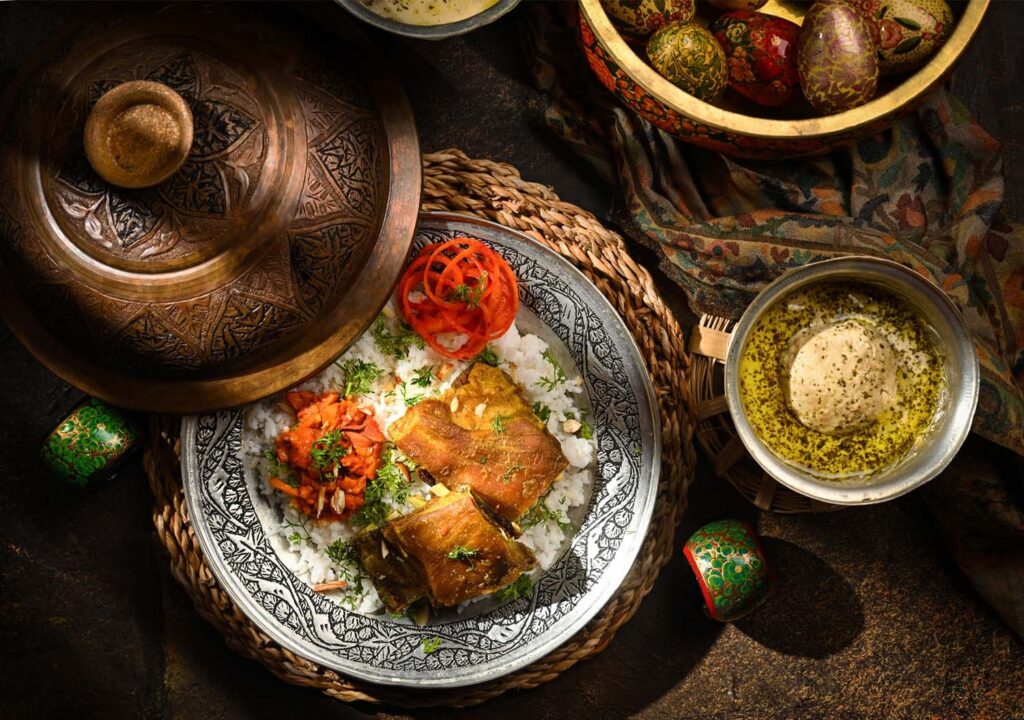
Imagine stepping into a world where each meal tells a story rich with culture, history, and community. This is the essence of the Kashmiri Wazwan, a grand feast that transcends the act of eating to become an artistic experience and a social ritual. Rooted in traditions that span centuries, the Wazwan makes every occasion memorable. The origins of Wazwan date back to the 14th century when Taimur’s invasions introduced Central Asian culinary traditions to Kashmir. The name “Wazwan” combines the Persian words waz’a (cook) and wan (shop). Over the years, these influences blended with local flavours, creating a unique culinary tradition passed down through generations.
The Art of Culinary Craftsmanship
 Central to the Wazwan is the meticulous preparation done by skilled chefs known as waza. These culinary artisans, led by a master chef or wouste, use large copper pots and cook over a wood fire, infusing each dish with rich, smoky flavours. The process is a labour of love, often beginning the night before, ensuring that each dish is cooked to perfection.
A Symphony of Flavours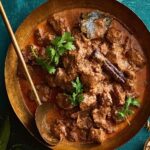
Wazwan is a multi-course feast, predominantly featuring lamb but also including chicken, vegetables, and fruits. Some highlights include:
- Rogan Josh: A lamb curry simmered with a blend of Kashmiri spices, dried chilies, ginger, and cloves. This dish has a rich and robust flavour.
- Tabak Maaz: Marinated and fried lamb ribs, crispy on the outside and tender inside.
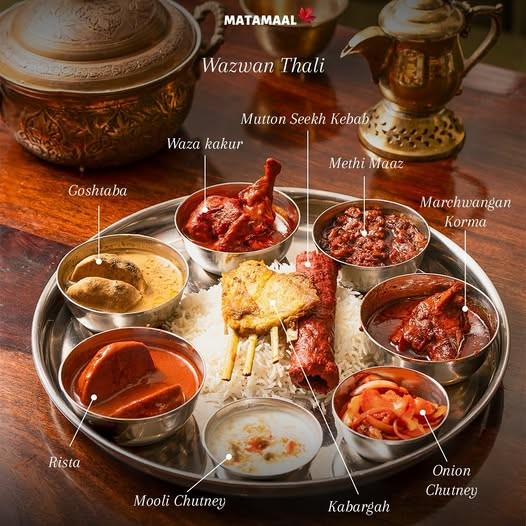
- Gushtaba: Minced mutton balls cooked in a creamy yogurt-based gravy.
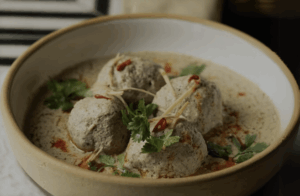
- Rista: Similar to gushtaba but in a rich, spicy gravy, highlighting the wazas‘ skill in balancing flavours.
- Yakhni: A yogurt-based curry, flavoured with fennel and cardamom, usually made with chicken or lamb.
- Seekh Kebab: Skewers of minced meat, typically lamb, mixed with spices and grilled to perfection.
Vegetarian dishes like haak (collard greens) and paneer (soft cheese in a spicy tomato gravy) add variety and balance to the feast .
The Ritual of Dining
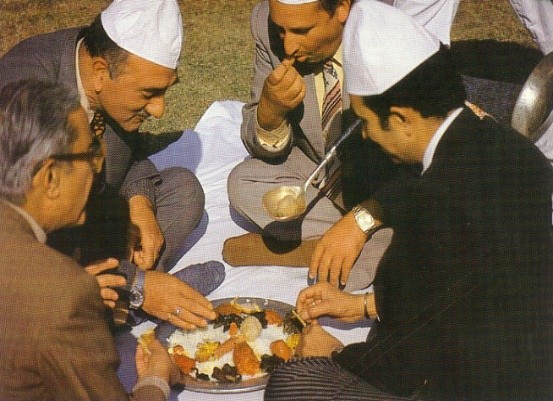
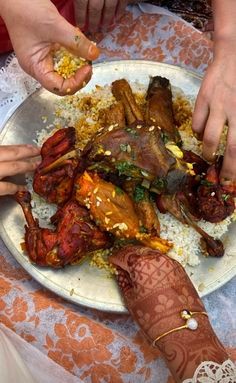
Wazwan is traditionally served on a large copper platter called trami, shared by four people, reflecting the communal aspect of Kashmiri culture. Before dining, guests partake in a hand-washing ritual using a mobile basin known as the trash naer, emphasizing cleanliness and respect for the meal . This ritual, known as Dast-Paak, symbolizes the importance of purity and cleanliness before partaking in a communal feast.
The serving process itself is a ceremony, with wazas presenting each dish in a specific order. The meal typically begins with lighter dishes such as tabak maaz and methi maaz, progressing to richer offerings like rogan josh and rista, and going on to the creamy, satisfying gushtaba. Accompaniments like chutneys, pickles, Kashmiri pulav, and yogurt enhance the experience, making each bite a blend of flavours and textures .
Preserving a Culinary Heritage
Despite the advent of modern culinary practices, traditional methods of preparing and serving Wazwan have been carefully preserved. Families in Kashmir continue to uphold these traditions, ensuring that each generation learns the skills necessary to create this feast. Wazwan remains a symbol of Kashmiri heritage, encapsulating the region’s history and cultural identity.
The preservation of Wazwan is not just about the recipes but also about the associated techniques and rituals. The wazas, for instance, often undergo rigorous training and apprenticeships to master the art of Wazwan preparation. This dedication ensures that the quality and authenticity of Wazwan continue to be upheld.
An Invitation to Experience
Kashmiri Wazwan is more than a meal: it is a cultural journey that invites you to experience the richness of Kashmiri life. Each dish’s unique story and flavour offers a glimpse into the region’s past and present. Whether enjoyed at a wedding or a festive gathering, Wazwan provides a sense of connection and community, making it an essential part of Kashmiri hospitality.
For those fortunate enough to experience it in Kashmir, Wazwan promises an authentic taste of this culinary tradition. This feast is a celebration of life, heritage, and the timeless art of cooking; embodying the essence of what it means to dine in Kashmir. The experience is not just about the food, but also the shared moments and stories that make every bite a journey into the heart of Kashmir.
Imagine sitting on the floor with friends and family, sharing a trami, and relishing each dish served with care and pride. The flavours, the aromas, and the camaraderie create an atmosphere that is both festive and intimate. In these moments, the true spirit of Wazwan comes alive, leaving an indelible mark on your palate and your heart.