Although Kargil Vijay Diwas has passed, some stories deserve to be told, not just on a date, but for all that they continue to mean long after the day is over.
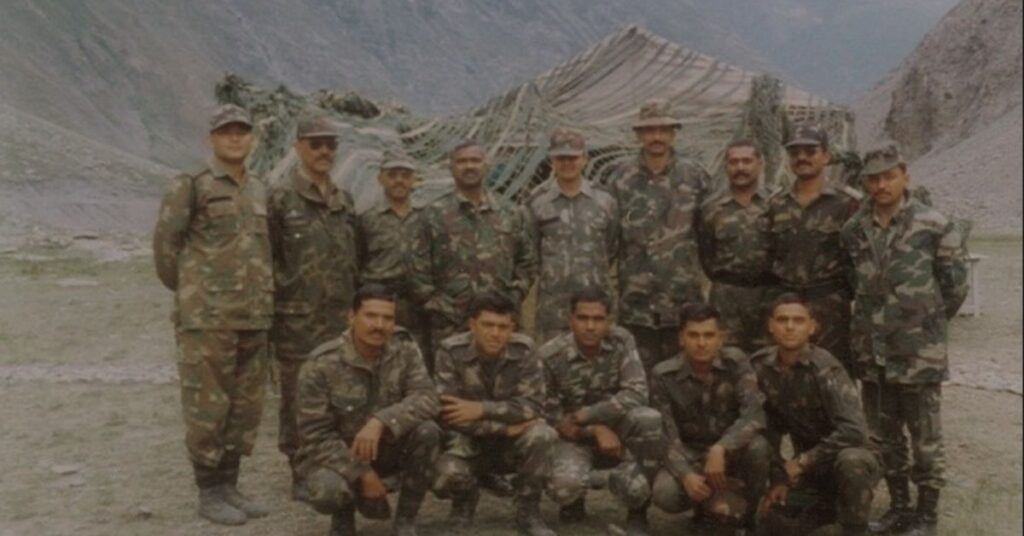
We had the privilege of sitting down with Maj Gen Dev Arvind Chaturvedi (Retd), a Kargil War veteran and a key member of our team, to revisit those critical days through his eyes.
Maj Gen Chaturvedi served in the Indian Army for 38 years, including over a decade across some of the most challenging operational regions: Poonch, Rajauri, the Kashmir Valley, and the Dras–Kargil sector. He has led from the front in multiple counter-terror operations and participated in significant Operations such as Operation Parakram and the 2016 Surgical Strikes.
You might expect a soldier with such a formidable record to be commanding and distant. But ‘Dev Sir,’ as we know him, is anything but. He is patient, thoughtful, and disarmingly humble, the kind of person who listens more than he speaks.
Through this interview, we wanted to not just revisit the war, but to also gain insight into what it means to lead, to serve, and to remain rooted in values that go far beyond the battlefield.
INTRODUCTION
Interviewer: Where were you posted when the Kargil War began?
Maj Gen D.A Chaturvedi:
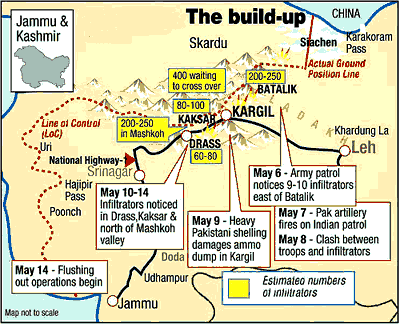
I was posted in a very interesting area of the Kashmir Valley called Lolab, located about 10 to 12 km ahead of Kupwara. I was a Major at the time, acting as the Second-in-Command of the battalion—commonly referred to as the “Barsati 2IC.” Our battalion was deeply involved in high-intensity counter-terrorism operations in Lolab, which had become a hotbed for foreign terrorists crossing over from Pakistan.
In early 1999, we first heard news of a minor infiltration in the Kargil-Dras area. Given the nature of the region, we didn’t think much of it—assuming it was just a localised incident that would be managed by the units posted there. There were no mobile phones back then, and information flow was limited. We carried on with our current tasks, unaware that something far bigger was underway.
Interviewer: When did it become clear to the Army that this was a full-scale infiltration and not just a border skirmish?
Maj Gen D.A Chaturvedi:
It began to dawn on us when we started hearing number of aircrafts flying overhead. We couldn’t see them, but the sounds were unmistakable. Soon after, we were ordered to move to a location called Hoshiar Ground and begin rehearsals for an attack operation. This was a major shift from counter-terrorism to conventional warfare.
Around that time, news channels began broadcasting live from Kargil and Dras. It became evident that this was no border skirmish; it was a large-scale, well-planned operation by Pakistan.
Interviewer: What was the terrain like, and how difficult was it to operate in those conditions?
Maj Gen D.A Chaturvedi:
I’ll take you through how we were deployed. It will show you the uncertainty we faced, what is known as the “fog of war” in military parlance.
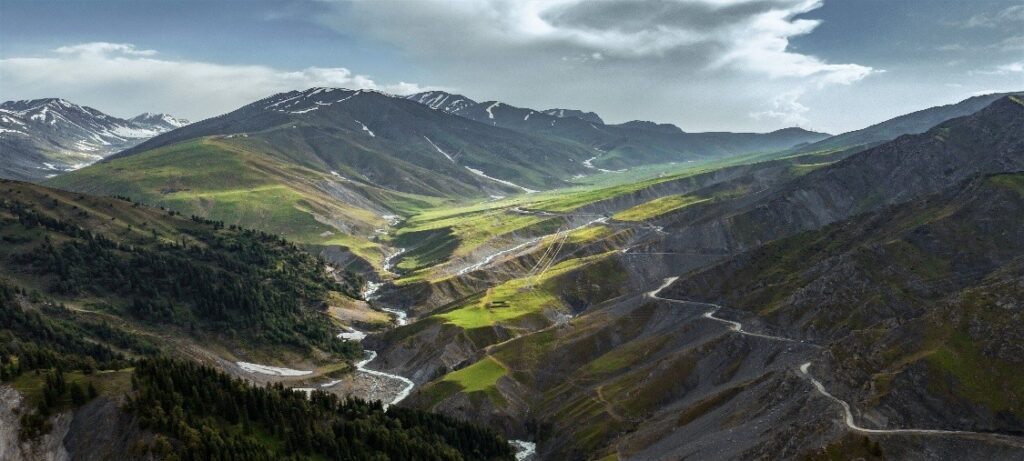
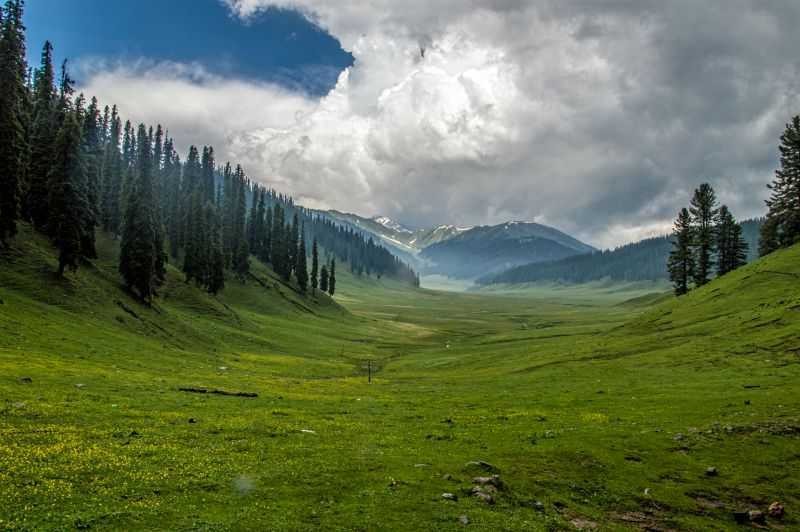
We were moved from Lolab to Hoshiar Ground for about a week, where we conducted reconnaissance and rehearsed in high altitudes (above 9,000 feet). Then we moved to Sonamarg, camped there for a day and then left for a place called Ghumri not far from Zoji La Pass. From Sonamarg to Ghumri, the route took us from 9,000 to 16,500 feet and we were told the estimated travel time was 6 hours. However, the last 20+ km was a treacherous stretch; it was a slushy and pothole-ridden road, which increased the travel time to 14 hours! We had set out in a convoy of 35 vehicles, and the last vehicle from the convoy took 14 hours to arrive!
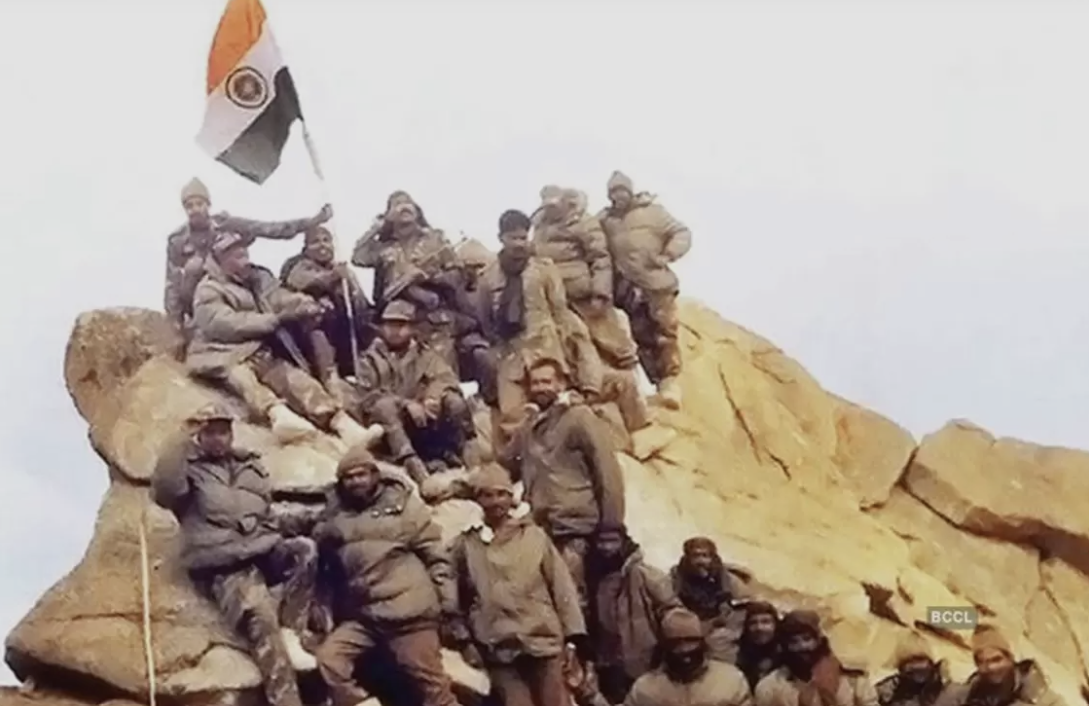
This was our introduction to the weather and the terrain of the Dras Kargil sector. To answer your question, it was extremely challenging to fight in such altitudes and terrain. Let me sum it up by giving you an example: all of us will remember Tiger Hill and how ferociously our valiant soldiers fought the battle to win it from the Pakistanis. I climbed up to Tiger Hill after the war was over; after reaching the top, my first thought was a silent salute to all the braves who fought to win it from the enemy, because just climbing up to the top would be a feat for most of us!
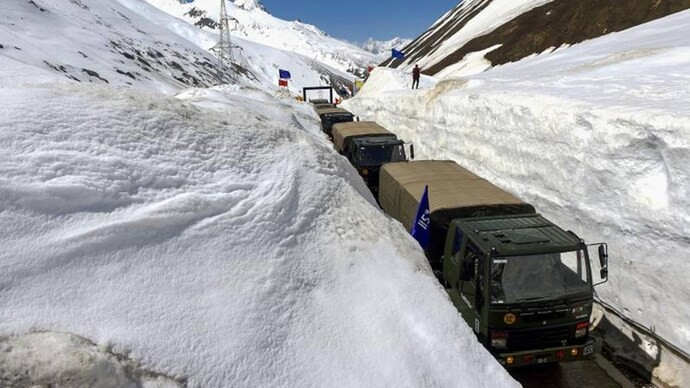
Army Convoy Passing Through Zojila Pass
Interviewer: What was your specific role during the conflict, and what moment has stayed with you the most?
Maj Gen D.A Chaturvedi:
I was leading the main body of the battalion while our CO handled recce and planning. There are two moments I remember vividly.
At Ghumri, we were tasked with road protection between Ghumri and Dras. The enemy, positioned on Tiger Hill, began shelling at us as soon as we pitched our tents. We had to cross a fast-flowing river under pressure to take cover. Then, as night fell, we crossed back the river to take our positions; however, one jawan froze. He couldn’t swim and was terrified. Two Gorkha soldiers tied a rope to him and helped him cross amid laughter and jeering. It was a moment of fear, but also camaraderie. Also, a reminder of how a soldier finds a moment to laugh and smile even during war, and while facing their fears.
The other moment is when our Company which had reinforced point 5000 was very heavily shelled by the enemy and a number of us got injured. It was then that I happened to speak to a radio operator whose fingers had been sliced off due to shrapnel. He calmly told me he wished to return to his unit. His pain threshold and sense of duty were something I’ll never forget.
Interviewer: What were the biggest logistical and strategic challenges faced by your unit?
Maj Gen D.A Chaturvedi:
It is a very good question. Normally, we cannot comprehend the acute and extreme degrees of challenge in terms of logistics because of the altitude and terrain. Logistics in high-altitude warfare are not just difficult; they are brutal. We were fighting between 14,000 to 20,000 feet. The air is thin, oxygen is scarce, and the terrain is simply a collection of massive boulders with no natural cover.
The peaks we had to capture often had razor-sharp ridgelines. Walking on them meant exposing yourself to enemy fire.
And once captured, those positions had to be held for the next 72 hours at least to evade a possible enemy counterattack. This required us to dig trenches, and we had to be sustained with food, water, and ammunition. Cooking was impossible. Water was scarce. Everything had to be thought through and carried out in advance.
Strategically, I faced a unique challenge. We had made an attack plan that involved approaching the enemy from the rear, which meant crossing the Line of Control. It was tactically sound and briefed in detail, but it was rejected because we did not have clearance to cross the LOC. That was the reality. Even when the enemy was sitting on our territory, our hands were tied by rules.
Interviewer: Was there a moment during the operation where you felt fear more than ever before?
Maj Gen D.A Chaturvedi:
It may sound cliché, but the fear of being shot or dying never really registered. Not just during Kargil, but in countless counter-terror operations, and even when I commanded the division in Rajouri later in my career.
That said, there’s a different kind of fear I do recall.
Once, our convoy was moving from Dras to a village called Huliyal. The tail end of the convoy came under enemy artillery fire. There were no casualties, though, and we reached the village Pal, which was deserted, we deployed two companies towards the hillside shot of the Nala, and two companies had to cross the Nala and get deployed on the far bank. After nightfall around 3 a.m., the enemy opened up with a heavy artillery barrage. I was shaken out of sleep and immediately rushed to check on our men posted across the far bank.
The centre on duty, fully alert, calmly told me that the companies were safe. Then he turned to his buddy and quipped in Gorkhali, “Aaj toh Second-in-Command saab ko darr lag gaya (Today, even the 2IC is scared).” That moment stayed with me, not because of the fear, but the quiet humour and grit with which our men handled it.
Interviewer: What do you remember about local civilians during the war? Were they helpful, fearful, or caught in between?
Maj Gen D.A Chaturvedi:
Most civilians had already evacuated, which is why places like Huliyal were empty. But the few who stayed back were a mix of helpful and deeply fearful.
It’s important to note that the majority of the population in the Kargil-Dras region is Shia Muslims. They often feel sidelined by the Valley-based leadership in Kashmir. In fact, it was a civilian shepherd from this region who was out looking for his goats. He first spotted the Pakistani intruders.
They were not just bystanders. They were witnesses. And in some quiet ways, contributors to early detection and situational awareness.
STRATEGIC REFLECTIONS
Interviewer: Would you say India’s restraint by not crossing the LOC was strategically wise or overly cautious?
Maj Gen D.A Chaturvedi:
That’s a layered question. Whether it was a conscious restraint or a constraint forced by external and internal pressures, I can’t say for sure. But with hindsight, here’s how I see it:
India is not an expansionist or revisionist power. Our national focus has always been on inclusive growth through education, infrastructure, and innovation. Not conquest. So yes, it was consistent with our national character to not open another front.
However, the decision not to cross the LOC, especially when it involved evicting the Pakistani Army from areas they had occupied, reflected an overabundance of caution. It limited our military options and prolonged the conflict unnecessarily. Sometimes, strategic clarity requires taking the fight to where it needs to go.
Interviewer: Do you think we are still reactive in defence procurements and strategic planning, or have we become more proactive since 1999?
Maj Gen D.A Chaturvedi:
Our defence preparedness still struggles under a unique ecosystem shaped by geography, politics, history, and bureaucracy.
Unfortunately, the Armed Forces are still not part of the core decision-making structure of India’s national security. Many in the political and bureaucratic class have little real exposure to the military. Their children don’t join the services. As a result, the forces are often seen as a non-productive expense, not as strategic enablers. Nehru had famously said that India did not require an army because he envisioned a Switzerland-like India, but he did not take geopolitics and other factors into account.
The result was the 1962 debacle, which we couldn’t sustain. It did lead to some recognition of the role, importance, and requirement of the military. In comparison, we did fairly well in the 1965 and 1971 wars. Although major issues remained and were brought out by the Kargil Review Committee. Some of them were also acted upon, like the appointment of CDS. But even that took 20 years to implement! The procurement system remains archaic, bogged down by turf wars, inefficiencies, and corruption concerns.
There’s progress, yes. But we are still playing catch-up. Emerging technologies like drones and cyber warfare require rapid adaptation. The efficacy of drones as a recce and weapon aerial platform with little detectable signature in Op Sindoor is an example that the military has to keep on evolving and adapting to changing war technologies and consequently its strategies and tactics.
And we’re not moving fast enough.
Interviewer: Do you think Kargil exposed a gap between ground-level intelligence and top-level decision-making? Have those shortcomings been fixed?
Maj Gen D.A Chaturvedi:
Intelligence gathering, sifting, collating and synthesising it is a complex process. As we are aware, intelligence could be of strategic, operational and tactical value. Several intelligence agencies are working on it at the national level, MI, IB, R&AW, state INT agencies to name a few. There are also several military wings in our embassies, as well as R&AW and IB personnel. These intelligence agencies are looking for inputs regarding the enemy, especially its military and are responsible for synthesising these inputs into intelligence.
Intelligence gathering is a tedious and back-breaking process in terms of the effort involved and also a thankless one: good and actionable intelligence may prevent 99 incidents, but they get brickbats for that one operation which couldn’t be prevented because of a lack of intelligence.
The problem isn’t always about a lack of inputs. Sometimes it’s about synthesising and acting on them in time. And when an enemy operation catches you by surprise, as Kargil did, it’s a failure of intelligence, plain and simple.
The Kargil Review Committee rightly flagged many of these gaps. Some have been addressed. But we still lack full synergy across intelligence agencies. Our cyber intelligence capability, for instance, is still underdeveloped and could be a serious vulnerability in future conflicts.
Interviewer: Do you believe nuclear deterrence actually failed in 1999, or did it work by keeping the conflict contained to Kargil?
Maj Gen D.A Chaturvedi:
Pakistan’s entire strategic posture towards India is built on two pillars: strategic depth and nuclear deterrence. To a degree, it did work for them. India did not widen the war into other sectors.
But that’s only half the story.
India, by nature and by policy, did not want to expand the war. We didn’t because of who we are—not because we were afraid of nuclear retaliation. So, while nuclear deterrence might have influenced the scope of the conflict, it didn’t dictate the outcome. It was our forces and our political calculus that did.
CONTEMPORARY THREATS AND FORGOTTEN LESSONS
Interviewer: Are we prepared for a future where kinetic warfare where kinetic warfare, narrative warfare, and digital disruption are all happening simultaneously?
Maj Gen D.A Chaturvedi:
Frankly? No.
As it is famously said, the armies always fight the last war. The Indian military is no different. We remain too conservative, too slow to adapt. And there’s a reason: decisions are made by senior officers, people with greying, often receding hairlines. Keeping up with modern tech is hard, and that hesitation trickles down the chain of command.
There’s also a deep-seated paranoia around information security. This often leads to bans and over-restrictions, rather than harnessing digital tools strategically.
We should be studying how nations like Israel remain agile in the face of constantly evolving threats. Their military is nimble, always on the front foot, and continuously adapting to new modes of warfare. We need that mindset: thinking, adapting, evolving, all baked into our training and sustained throughout service.
Interviewer: Considering the Pahalgam attack recently, do these attacks echo Pakistan’s desperation after Kargil?
Maj Gen D.A Chaturvedi:
Pakistan is a failing state. But unfortunately, we’re neighbours and as Vajpayee rightly said, you can’t choose your neighbours. India would much rather have no interaction with Pakistan and maintain the status quo.
However, the Pakistani Army uses Kashmir as a lifejacket. When there’s internal turmoil, economic collapse, power struggles, terrorism in Kashmir becomes their default distraction. Attacks like Pahalgam aren’t isolated; they’re part of a recurring pattern.
Take Operation Sindoor. What followed? A ceasefire. General Munir consolidating power. A state that sponsors terror was rewarded with lunch at the White House!
India needs to move beyond tactical reactions. We need a long-term, proactive doctrine—even if that means advocating for the eventual disintegration of Pakistan into multiple warring states. That might be the only way to end this cycle.
Interviewer: Do you really believe India could attempt something similar to what the U.S. did in Eastern Europe (like the Balkanization strategy)? And even if it were possible, wouldn’t fragmenting Pakistan potentially create more long-term instability and new security challenges for us?
Maj Gen D.A Chaturvedi:
For decades now, Indian strategic thinking has operated on the premise that we need a stable Pakistan. Our efforts, whether diplomatic, military, or political, have largely been aimed at preventing complete collapse on their side, because the fallout of an unstable nuclear-armed neighbour is concerning. But in all this time, Pakistan has not reciprocated. It has weaponised the idea of Jammu & Kashmir for its own military and political survival, while constantly nibbling away at India through proxy wars, terrorism, and psychological warfare.
That said, let me add two points that are rarely discussed in mainstream discourse.
First, we tend to forget the true extent of the Indian civilisational and administrative footprint. The British-Indian empire stretched from Burma in the east to parts of the Arabian Peninsula in the west. Indian Civil Service officers ran administration in many of these places. At the time of Partition, we were broken into India and Pakistan, and Pakistan itself had two limbs: East and West. Today, East Pakistan no longer exists, and we have Bangladesh. Now, even if Bangladesh is not always friendly to India, it’s far more stable and predictable than what East Pakistan would have been. So, in a way, the separation of East and West Pakistan has worked in our favour.
Second, we accepted the Partition far too quickly. We thought in terms of securing the Indian mainland, but the British had ruled the whole subcontinent as one unit. If they could govern it, why was it assumed we could not? Just like in other regions where colonial powers exited, they engineered divisions in the Indian subcontinent — to ensure that no single regional power would emerge strong enough to challenge global interests.
Now, if you apply this to Pakistan today, you’ll realise something: Pakistan will not change its attitude toward India. Even after operations like Op Sindoor, they will regroup, replan, and try again. Maybe not immediately, but they always do. So then, how long can we keep reacting? Perhaps it’s time to look beyond stability and rethink the geography of threat.
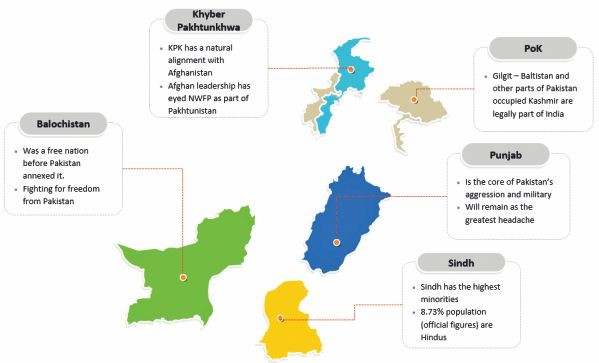
If Pakistan were to fragment into its natural regional identities: Sindh, Balochistan, Khyber Pakhtunkhwa, etc., it would be forced to look inwards. These regions already have their own ethnic, economic, and political grievances. Once fragmented, their energy would go into internal governance and survival, and they would lose the strategic bandwidth to meddle in Kashmir or pose a united threat to India. The army-mullah nexus that thrives on anti-India narratives would lose its national platform.
So yes, a fragmented Pakistan may well offer a more secure and stable neighbourhood in the long run than the current artificially unified, and dangerously militarised, state we’re dealing with.
Interviewer: Does the Pahalgam attack suggest new infiltration corridors, or does it tie back to old logistical pathways used even during the Kargil War? What does this say about the geography of terrorism in J&K?
Maj Gen D.A Chaturvedi:
Geography dictates the major discourse in international relations, and the book, “Revenge of Geography”, brings it out very well. The Poonch salient, which juts into India, provides the terrorists an avenue to infiltrate using the scraggy heights of the Pir Panjal range and slip into the southern region of the Kashmir Valley. It is the geography which helps them get there.
The Dras-Kargil region is located beyond the Kashmir Valley and is characterised by vastly more challenging terrain and a different population set. Terrorists need a favourable population as much as a fish needs water to survive. So, a combination of geography and population will ensure that South Kashmir will always be more vulnerable to terrorist attacks than the Kargil region.
Interviewer: What do you think after the recent attack at Pahalgam have we forgotten the hard lessons of Kargil? The cost of letting our guard down in high altitude and high-risk zones?
Maj Gen D.A Chaturvedi:
Your question does merit some introspection: Did we let our guard down because the number of terrorists and their activities had fallen significantly? Did we feel that abrogation of Article 370 had broken the back of terrorism in the Valley, and all was hunky dory?
Introspection will point towards a degree of laxity having set in because of signs of normalcy appearing across the valley: no calendar of hartals by Hurriyat, regular schools and colleges, influx of record number of tourists, etc.
In all this sense of false euphoria, we forgot that Pakistan had its hand on the terrorists’ tap in J&K and could turn it on at any time. To be fair, I had interacted with a number of officers and civilians post the abrogation of Article 370 and both conveyed that state of near normalcy, which was definitely good for the common man , there was a simmering sense of being robbed and terrorist acts were a definite possibility.
Was there an intelligence failure at Pahalgam? Yes. But we can’t lay the blame entirely at the doorstep of our intel agencies. Local police, ground stakeholders, and everyone share the burden of vigilance.
Terrorism, once it takes root, is hard to eliminate. Especially when it’s supported by an external power. A single terror strike may cause fewer deaths than a day on Indian roads, but its psychological impact is far deeper. It destabilises. It provokes. It nearly brings nations to war.
We must remain alert, not reactive. Strategy should be proactive, with a clear doctrine, intent, and the will to act when—and where—we choose.
LEADERSHIP, LEGACY AND PATRIOTISM
Interviewer: During the Kargil War in 1999, PM Vajpayee led the country through crisis. Today during operations like Sindoor and in response to recent attacks, we again have a BJP government at the helm. From your experience, how would you compare the leadership approach then and now in terms of military decisiveness, public morale and strategic clarity?
Maj Gen D.A Chaturvedi:
The leadership approach, though of the same government, has been very different. Firstly, the personalities of the two prime ministers are different: Mr Vajpayee was more of a dove who well understood the futility of war and wanted the issue to be resolved without getting into the ‘aar paar ki larai’.
Mr Modi has projected himself as a strong leader who has, to quote him, ‘56 inch Ka Seena’. Both of them had to react.
For Mr Vajpayee, it was like a knife in his back because he had signed the Lahore accord a few months ago. Incursions in the areas of Kargil and Dras were much more serious looking, with the aim of the enemy, i.e. to cut off Leh and Ladakh from the rest of the country and change the line of control to Pakistan’s advantage. This required much greater effort from the Indian Armed Forces than Op Sindoor. Kargil was a localised war as compared to Op Sindoor, which was an exchange of missile hits and interceptions that was a mere 3-4day affair because the enemy was hit badly.
India at the time of Kargil was not as strong both militarily and economically; lessons from Kargil did help the Indian military during Op Sindoor to hit the enemy hard, where it hurt.
Economically, India is the third largest economy in the world and that matters. We are trying to work out FTAs with countries and trading blocs which will help us grow more economically, but I would bring in some caution in chest thumping as we made short work of Pakistan’s false bravado.
Pakistan is a laggard as far as its economy is concerned: it is trying to get out of the economic morass through the IMF, and it’s not easy given the polity of Pakistan and the intent of its army to rule it by proxy. India is far ahead economically, while also calling Pakistan’s nuclear bluff.
The first point of caution, I would like to say, is that we should be focusing on China as our primary adversary, as both nations are developing into economic powerhouses and are also strengthening their militaries. And China is a different kettle of fish and will require political and diplomatic skills backed by a strong, modern and integrated military. The second point is that as India rises in the world both economically and militarily, the established powers will like to stymie its attempts to its rightful place in the world order. Again, it would require very skilful deft footwork to avoid the ambushes and the mines laid in India’s quest for a place in the high council. We need to remember that there are no permanent friends or enemies; national interests are permanent.
Interviewer: On a last note, what does patriotism mean to you personally?
Maj Gen D.A Chaturvedi:
I will give a perspective on your question before I answer it specifically.
The concept of modern nation states is about two centuries old, which was established by the Westphalia Treaty and subsequently the formation of the United Nations Organisation and the recognition of national sovereignty. Added to this is the fact that every country’s trajectory through the ages has been different.
The modern Indian state came about in 1947 and, contrary to the doubting Thomases, has successfully overcome the challenges of lingual and cultural diversity to reach where it is today.
My maternal grandfather was a freedom fighter and devoted his life to the independence struggle. My parents experienced the freedom movement as teenagers and it left a lasting impression on them. They were fiercely patriotic, meaning that they believed in and were proud of their country and themselves as Indians.
India was poverty-stricken, which had to find its way out of the extreme economic deprivation and other centrifugal tendencies. Let me give an example of how bad the conditions were: Lal Bahadur Shastri, as the prime minister, had asked his countrymen to fast on Mondays as there was not enough grain to feed all mouths! The situation is so much better now that the current generation of Indians will find it difficult to relate to those times.
To me patriotism is being a proud Indian and contributing towards its growth as a nation and the rising tide will lift all the boats .
Politics will always be divisive and at times work at cross purposes with national interests but democracy generally and specifically for India, is the best form of government with all its warts. To me patriotism means, and I am not exaggerating, welling up of tears in my eyes whenever the national anthem is played and/or the tricolour is raised. The thought of personal sacrifice for the tricolour is inherent in the welled-up tears.
In a time when patriotism is often reduced to slogans and symbolism, your words bring it back to where it truly belongs: in quiet pride, lived values, and an unwavering readiness to serve.
Patriotism, as you’ve described it, is not loud or performative.
It is the welling up of tears. It is the tricolour rising.
And it is the knowing of what it takes to keep the tricolour flying.
It has been an honour and a privilege to work with you over the past year, and to have had the opportunity to interview you today. A soldier’s life is filled with countless life-changing moments, moments that no single interview can ever fully capture. I hope this is the first of many such conversations, so that we may continue to gain glimpses into the life, courage, and clarity of those who wear the uniform.
Thank you so much for your time, your candour, and your continued light.
Jai Hind!