People of Kashmir
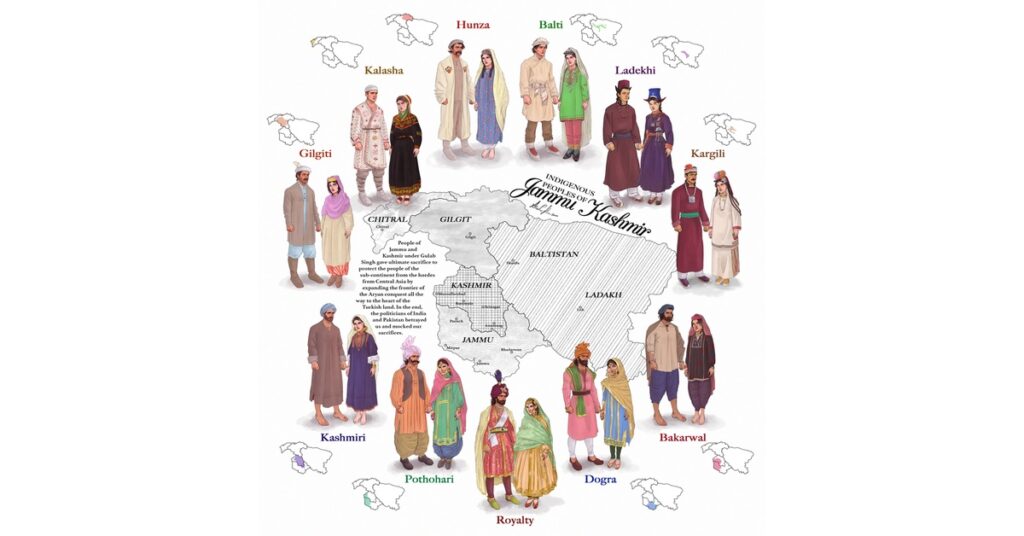
There’s a common notion among us that the people of Kashmir are known as Kashmiris. Of course, Kashmiris do make up a significant population in the Union Territory, however, there are other ethnicities too that reside in the region.
Throughout medieval history, Kashmir has been a strategic hotspot due to its location along the Silk Route, the ancient superhighway for trade. This made the emperors in the neighboring regions eye Kashmir for their conquests. It started with the Mauryas, followed by the Kushans, Mughals & finally the British. 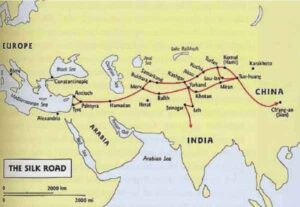 The diversity in these empires that have reigned Jammu & Kashmir has made Kashmir a melting pot of culture today, surrounded by this rich tapestry of different traditions. It’s like living in a history book where every chapter has left a colorful imprint.
Kashmiris
 The origin of Kashmiris is unknown. However, theories suggest that the Dards were the early inhabitants of Kashmir Valley & Gilgit Baltistan. And since Kashmir has always been at a cultural crossroads, travelers, mystics, and merchants frequented the land, often influencing people. Sufi Saints & missionaries were no different. They traveled from Central Asia to Kashmir in the early medieval centuries which led to the spread of Islam & the mystical vibes of Sufism across the Valley.
Today in the Kashmir region, Kashmiri Muslims make up 96% of the population & Kashmiri Hindus make up 4%. Kashmiris have endorsed syncretic traditions as they practice Kashmiri Shaivism & Buddhism along with Sufism, 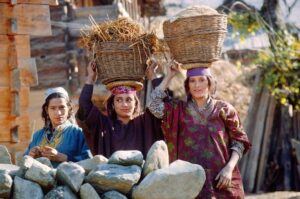 keeping the traditions of Kashmiryat alive! It’s like a cultural cocktail that’s uniquely Kashmiri. The predominant language used to converse is Kashmiri. Although Kashmiri is rooted in the ancient Dardic tongue, it has adopted words from Sanskrit, Punjabi, & Persian along the way.
Gujjars & Bakarwals
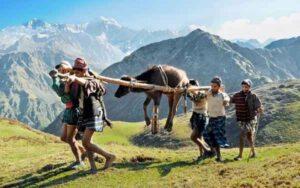 Gujjars & Bakarwals are ethnically related & are a nomadic community. The only difference is that Gujjars tend to buffaloes while the Bakarwals herd sheep. This community has shaped the pastoral traditions of Jammu & Kashmir. While the Gujjars are found throughout India, the Gujjars in J&K have carved out their unique identity in the Valley. Originally hailing from Gujarat, the Gujjars migrated to Kashmir & adopted Islam over time while maintaining certain Hindu rituals reflecting their diverse heritage.
The Gujjars migrate in harmony with the seasons. As summer sets in they trek upwards towards the higher reaches of the Himalayas through either Pir Panjal ranges or the Banihal Pass, to seek lush green pastures for their livestock. Come winter, they migrate back to the warmer plains of Jammu (Kathua, Doda, Udhampur). Gujjar villages are a common sight in Poonch & Rajouri. They’re also settled across the border in Pakistan-occupied Kashmir (PoK) in Mirpur, Bhimber, Kotli, & Muzaffarabad districts.
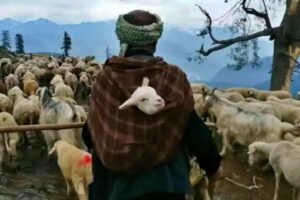 The Gujjars speak Gujari, an Indo-Aryan language akin to Mewati. Yet, their nomadic lifestyle across various terrains has gifted them with other tongues like Paahari, Dogri, and Ladakhi adding layers to their cultural fabric. However, Gujjars from PoK largely speak in Pothwari.
Paharis
Paharis in the Indian Subcontinent is referred for people who have thrived in the mountainous terrain for centuries. They share similar culture, traditions & language that binds them together as a distinctive ethnic group. The Paharis in J&K have largely settled around the Pir Panjal ranges in Rajouri, Poonch, Baramulla, Kupwara, and Anantnag. They embody diversity in every sense as their religious affiliations include Hinduism, Islam & Sikhism.
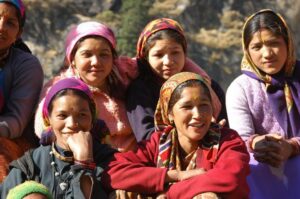 For centuries Paharis have practiced a variety of occupations such as agriculture, horticulture, and Handicrafts. However, it was not all rosy for the Paharis in J&K. During the tumultuous Partition of 1947, many Paharis faced displacement, severing longstanding cultural ties with western Punjab. Today Paharis stand as a testament to resilience, preserving their cultural heritage despite challenges.
Dogras
Originally from Rajasthan, the Dogras migrated to J&K & settled amidst the majestic 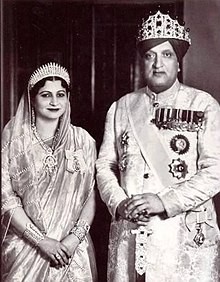 Shivalik mountain slopes & the serene twin lakes of Surinsar and Mansar. The Dogras brought with them a rich Hindu heritage. But over time sections of the community embraced the paths of Islam & Sikhism, adding layers of diversity to their culture.
The Dogras rose to prominence under the illustrious Dogra dynasty, who claimed to trace their lineage back to the ancient Ikshvaku Dynasty of Northern India. From the Dogra seat of power in Kashmir, they reigned over their kingdom from 1846 to 1947, spanning from Jammu, Ladakh, Kashmir & even parts of Himachal Pradesh and Punjab. (Read more on wikipedia)
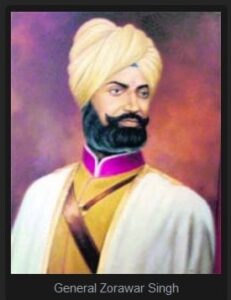 General Zorawar Singh is hailed as the ‘Napoleon of India’. He earned the Dogras a fearsome reputation for military prowess throughout history. The Dogra Regiment, born from this courageous community, became an integral part of the Indian Army.
As for language, Dogras predominantly speak Dogri, a language that is influenced by Western Pahari traditions that echo through the valleys and peaks!
Ladakhis
According to the Ladakh District Census Handbook, the present-day population of Ladakh 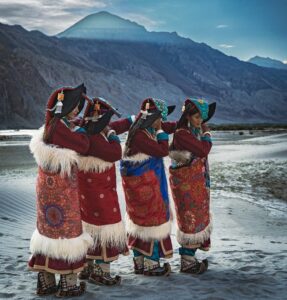 is a blend of the Dards, Mons, and Mongolians. These tribes used to lead a nomadic pastoral lifestyle. This transitioned to agriculture due to the changing times. What truly sets Ladakh apart is its spiritual journey. Buddhism has deeply influenced the region as it made its way to Tibet from Central India. The majority of Ladakhis follow the Vajrayana tradition, a form of Tibetan Buddhism. (Read more on wikipedia)
Ladakh is the definition of harmonious coexistence where Buddhists, Muslims (Shias belonging to the Balti ethnic group), and a small Hindu population share this picturesque land. Although Ladakhi, from the Tibetan language family, is the official language, other dialects too are spoken in the region. For example, if you were to visit Kargil, you’d hear the melodic tones of Balti!
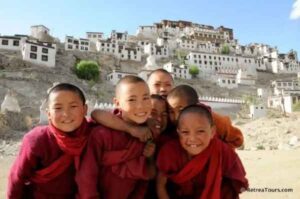
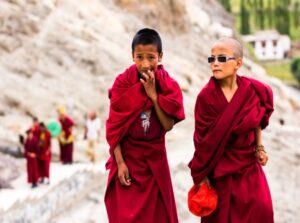
This isn’t all. There’s more. Continued in Part II.
Written by Vidhee
Frequently asked questions:-
Who are the Gujjars and Bakarwals?
Answer: Gujjars and Bakarwals are nomadic communities of Jammu & Kashmir. Gujjars traditionally rear buffaloes, while Bakarwals focus on sheep and goat herding. Both groups have preserved their rich pastoral heritage for centuries.
Where do Gujjars and Bakarwals live in Jammu & Kashmir?
Answer: Gujjars and Bakarwals are spread across the Pir Panjal, Rajouri, Poonch, Kathua, Udhampur, and Doda districts. They follow a seasonal migration pattern, moving to the high Himalayan pastures in summer and returning to Jammu’s warmer plains during winter.
What language do Gujjars and Bakarwals speak?
Answer: The main language is Gujari, an Indo-Aryan language. However, due to their migration routes, many also speak Pahari, Dogri, Ladakhi, and Pothwari (in PoK areas).
What religion do Gujjars and Bakarwals follow?
Answer: Most Gujjars and Bakarwals in Jammu & Kashmir follow Islam, though they have historically retained some Hindu rituals and cultural traditions from their ancestral past.
What is unique about Gujjar and Bakarwal culture?
Answer: Their culture revolves around seasonal migration, livestock rearing, oral storytelling, folk music, and traditional attire. Their lifestyle showcases resilience and harmony with nature, making them an integral part of Kashmir’s diverse cultural fabric.
Why are Gujjars and Bakarwals important for Jammu & Kashmir’s heritage?
Answer: They are the guardians of age-old pastoral traditions and play a vital role in the region’s ethnic diversity. Their migration patterns also contribute to the ecological balance of mountain pastures and valleys.

Nice